The Chariot Tarot Card Meaning
The Chariot
Pamela Colman Smith, 1909
- Upright
- determination · direction · willpower
- Reversed
- lack of direction · scattered effort · aggression
- Arcana
- Major · Number VII
- Element
- water
- Learn it in
- Day 12 of the 30-Day Tarot Path
In short
The Chariot is the card of direction and self‑command. Upright, it points to focus, discipline and moving forward even when parts of you pull in opposite ways. Reversed, it can show scattered effort, loss of control, or pushing too hard. The driver holds no reins, so the steering has to come from within.
What you see on The Chariot card
Look first, read later: this is the Image-First Method from Day 5 of the course. Start with what is actually in the picture.
- Figure
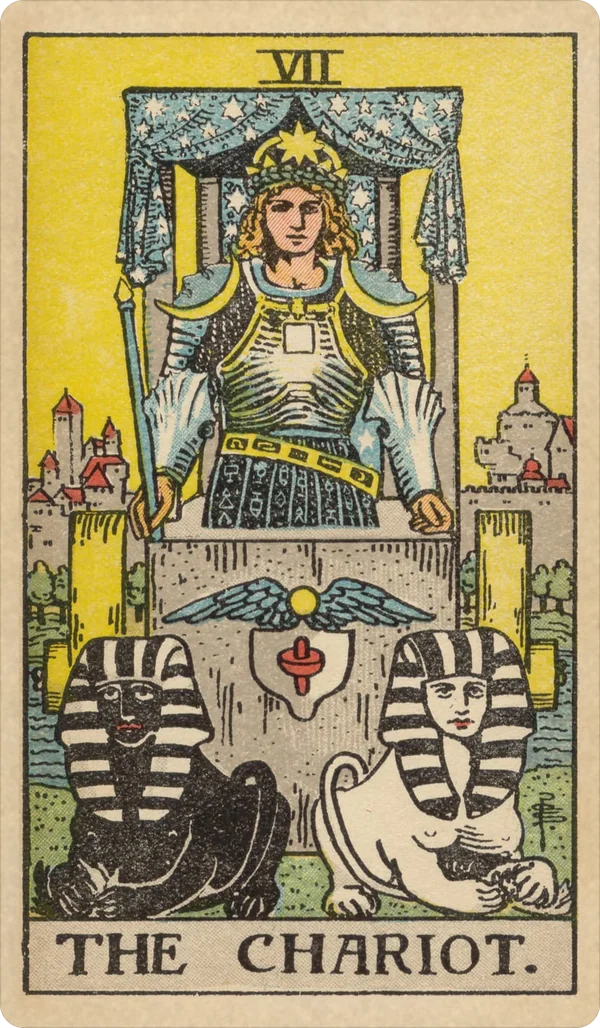
- A young charioteer with curly hair stands in a stone chariot, wearing armor, a crown with an eight‑pointed star, and crescent moons on both shoulders.
- Action
- He holds a long wand in his right hand and stands still and upright. There are no reins in his hands at all.
- Setting
- Behind him stretches a river and a walled town with red rooftops and towers. The chariot seems to have just left the city.
- Color
- A blue canopy covered in white stars hangs over his head against a bright yellow sky.
- Detail
- Two sphinxes rest in front of the chariot, one black and one white, looking in slightly different directions. A winged disc and a red emblem decorate the chariot’s front.
The Chariot upright meaning
Two sphinxes, one dark and one light, sit at the front of the chariot. Neither is harnessed, and they are not looking the same way. The driver has no reins. If this vehicle is going anywhere, it is because the person inside has decided where to go and holds that decision steady.
That is the heart of The Chariot. Upright, it points to willpower that comes from inner alignment, not from force. You may feel pulled between two desires, two duties or two parts of yourself. The card does not ask you to destroy one. It asks you to hold both and drive forward anyway.
The armor and the walled city behind him suggest that he has left something safe to pursue a goal. This can describe a move, a training plan, a hard semester, a recovery, a creative project with a deadline. It favors commitment: picking a destination and staying on the road even when motivation dips.
The starry canopy and the moons on his shoulders hint that even a determined person is shaped by forces larger than willpower. Moods, seasons, energy levels. The Chariot does not deny them. It invites you to steer through them. In a daily pull, ask: where do I want to go, and what in me is pulling the other way?
The Chariot reversed meaning
Reversed, The Chariot loses its line. The sphinxes wander off in different directions and nobody is steering. This can feel like trying to pursue five goals at once, or like constantly changing course based on other people's opinions.
It can also point to the opposite problem: forcing it. Grinding forward on pure willpower, steamrolling people, refusing to rest because stopping feels like failure. The reversal invites you to check your direction before you push harder. Is this still where you want to go? Are your efforts working together, or against each other? Sometimes the strongest move is to stop, realign, and start again more slowly.
The Chariot in love and relationships
Upright in love
In love, The Chariot points to commitment and shared direction. It may reflect a couple working toward a goal together, such as a move, a long-distance phase or building a home. It can also describe the effort it takes to keep a relationship moving when life gets busy. For someone single, it may encourage going after what you want with clarity instead of waiting. The card asks you to notice whether you and your partner are steering the same way, or quietly pulling in different directions.
Reversed in love
Reversed in love, The Chariot can point to a relationship that feels like a tug-of-war. Different goals, control struggles, or one person always deciding the direction. It can also reflect rushing a connection forward to reach a milestone. The card does not judge the relationship. It invites you to pause and talk about where each of you actually wants to go. Two sphinxes can share one chariot, but only if someone is paying attention to the steering.
The Chariot as feelings
As feelings, The Chariot reflects determination, focus and a strong drive to make something work. If you pull it while thinking about a connection, notice whether you feel motivated and clear, or pushed and pressured. It can also reflect mixed feelings held together by willpower, like the two sphinxes. Rather than use the card to guess at another person's intentions, ask what you are steering toward in this connection and what part of you is resisting.
The Chariot in career and money
On the job, The Chariot is a strong card for goals, deadlines and ambition. It favors projects that require focus over a long stretch: launching a business, studying for an exam, finishing a big piece of work. It also suggests managing competing priorities by choosing what matters most. If you feel pulled between two jobs or paths, it asks which one moves you toward your real destination. With money habits, it supports discipline and consistent effort rather than quick wins.
The shadow side of The Chariot
The Chariot's shadow is control as a way to avoid feeling. It is possible to stay so busy driving forward that you never stop to notice whether you are happy, tired or lost. Shadow work with this card asks: where am I using achievement to outrun something? Another shadow is the need to win, treating every relationship and conversation as a race. Look at the two sphinxes. Many people try to suppress the darker one, the doubt, anger or fear, and keep only the bright, confident side visible. The card shows both sphinxes sitting calmly in front of the chariot. Both belong to you. Leaving one behind just means it will tug at the wheel later.
The Chariot in yes-or-no questions
The Chariot is often read as a victory card. We do not use the cards to name winners or outcomes. The open question gives you something to steer by, which is what this card shows: direction that comes from within.
Instead of
“Will I win this competition?”
Try
“What do I need to focus on, and what do I need to stop doing, to give this my clearest effort?”
The Chariot as advice
Taken as advice, The Chariot says: pick a direction and hold it. Name one goal for this week and two habits that will move you toward it. When you feel pulled off course, pause and ask which sphinx is pulling, and why. Steady steering beats bursts of effort.
Journal prompts for The Chariot
- Where do I want to go right now, in one clear sentence?
- What two parts of me are pulling in opposite directions, and what does each one want?
- The charioteer has no reins. What keeps me on course when nobody is pushing me?
The Chariot with other cards
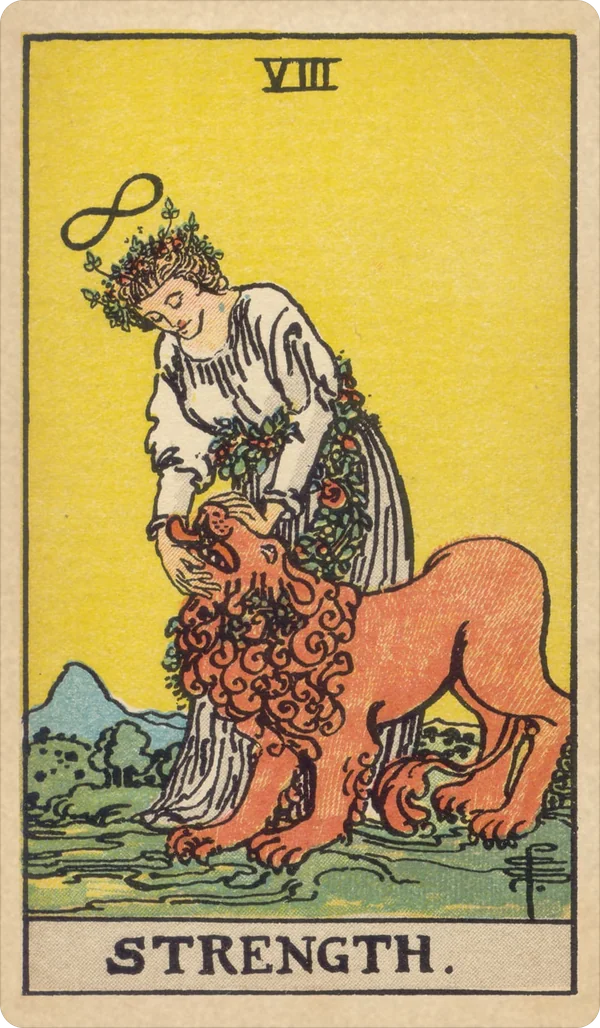
- The Chariot and Strength
With Strength, willpower meets gentleness. The pair suggests moving forward through patience and self-compassion rather than force.
- The Chariot and Six of Wands
With the Six of Wands, effort meets recognition. The pair reflects a milestone reached through focus and persistence.
- The Chariot and Six of Swords
With the Six of Swords, the journey is a transition away from something hard. The pair favors steady movement toward calmer water.
- The Chariot and Seven of Wands
With the Seven of Wands, you may need to hold your ground. The pair asks you to defend your direction without losing your temper.
The most common misreading of The Chariot
One idea that keeps circulating is that The Chariot is about travel, a car or a literal journey. It can sometimes connect to a trip, but in the 1909 deck it is mainly about inner direction and self-discipline. A second mistake is assuming that it means winning at any cost. The charioteer does not whip anything. His control is calm and internal, and that is the lesson.