Judgement Tarot Card Meaning
Judgement
Pamela Colman Smith, 1909
- Upright
- awakening · reckoning · renewal
- Reversed
- self‑doubt · harsh self‑judgment · ignoring the call
- Arcana
- Major · Number XX
- Element
- fire
- Learn it in
- Day 19 of the 30-Day Tarot Path
In short
Judgement is the card of awakening and a clear inner call. Upright, it asks you to review your past honestly, forgive what you can, and answer a calling that has been getting louder. Reversed, it points to self‑doubt, harsh self‑criticism or ignoring that call. It is less about being judged and more about rising to meet who you are becoming.
What you see on the Judgement card
Look first, read later: this is the Image-First Method from Day 5 of the course. Start with what is actually in the picture.
- Figure
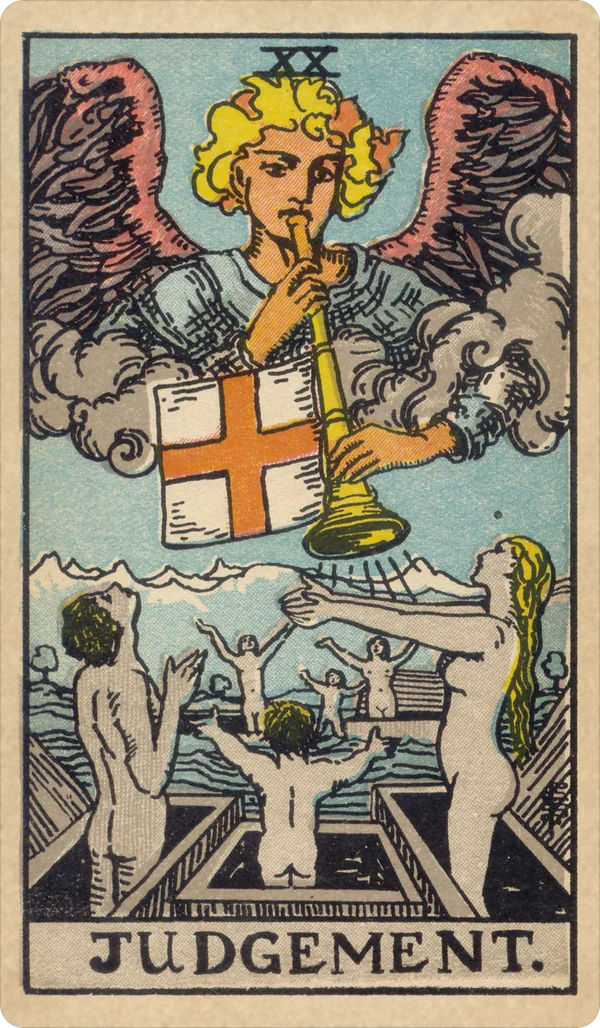
- A large angel with curly golden hair and red‑purple wings leans out of the clouds at the top of the card.
- Action
- The angel blows a long golden trumpet. A square white flag with a red cross hangs from it, and short lines show the sound pouring down.
- Setting
- Below, gray‑skinned nude figures rise from open, box‑like coffins floating on water. A woman, a man and a child stand closest, with more figures behind them and white snowy mountains in the distance.
- Color
- The sky is pale blue, the figures are pale gray, and the trumpet and angel’s hair glow gold. The red cross is the sharpest spot of color on the card.
- Detail
- Every figure lifts their arms toward the angel, some with palms open and some reaching high, as if each person answers the call in their own way.
Judgement upright meaning
Everyone on this card is responding to a sound. The trumpet blasts, and people climb out of their boxes with arms raised. Pamela Colman Smith drew a whole family, a woman, a man and a child, plus others behind them. Nobody is being sorted into good and bad. They are simply waking up.
Upright, Judgement describes that kind of awakening. It often shows up when you are ready to look back on a chapter of your life with honest eyes, take in the lessons and move on lighter. It can also describe a calling: a career shift, a creative project, a value you can no longer ignore. The card asks what voice has been trying to get your attention, and whether you are ready to answer.
The boxes are worth a closer look. They float on water, and the people are stepping out of them. Some read the boxes as old roles and limits you have outgrown. The card invites you to notice which box you are still lying in, and what it would feel like to stand up.
Judgement also has a forgiving side. Reviewing your past does not mean punishing yourself for it. It means understanding it well enough to choose differently now.
Judgement reversed meaning
In the reversed position, Judgement often points to an inner critic that is too loud. You may be replaying old mistakes, judging yourself harshly, or feeling unworthy of the next step. The call is there, but fear of getting it wrong keeps you in the box.
The reversal can also describe ignoring a clear sign that something needs to change, such as staying in a role because leaving would mean admitting you have outgrown it. The card asks you to soften the self-judgment enough to hear what the call is actually asking. Often it is smaller and kinder than the critic suggests, and you can take it one step at a time.
Judgement in love and relationships
Upright in love
In love, Judgement points to honest reflection and renewal. It may appear when partners take a clear look at their relationship, own past mistakes and choose each other again with fresh eyes. It can also describe a realization about what you truly need in love, prompting a meaningful change. For someone single, it may point to learning from past relationships and feeling ready to love in a new, more conscious way.
Reversed in love
Reversed in love, Judgement can describe being stuck in old patterns or holding grudges that keep a relationship from moving forward. You may be judging your partner, or yourself, for something that happened long ago. The card asks you to notice whether forgiveness, or at least understanding, is possible. It can also point to avoiding a big conversation about where the relationship is heading. Saying the important thing out loud often brings relief.
Judgement as feelings
As feelings, Judgement describes a moment of emotional clarity. In a connection, it asks you to notice realizations that are surfacing: seeing someone clearly for the first time, understanding what the relationship means to you, or recognizing how past experiences shape your reactions. These feelings can be intense but clarifying. Consider whether you are ready to act on what you now see, or whether self-doubt is keeping you quiet.
Judgement in career and money
In your working life, Judgement often points to a calling or a turning point. It may appear when you are reconsidering your career path, weighing a big change or finally recognizing what you want to do. The card encourages honest review: what has worked, what has not and what you have learned. It also asks you to answer the call even if it feels risky. In money habits, it can describe reviewing old choices and making a fresh, more intentional plan.
The shadow side of Judgement
Look at Judgement from its shadow side and you find the harsh internal judge. It is the voice that replays every mistake, compares you to others and decides you never measure up. Shadow work with this card means listening to that voice and asking where it came from. Often it borrowed its words from someone else: a parent, a teacher, a culture. Judgement in shadow can also turn outward, as quick, unfair verdicts about other people. Both patterns block the real gift of this card, which is the chance to rise and start again. The figures on the card are gray, still half asleep. Your shadow may be the part of you that has not woken up yet.
Judgement in yes-or-no questions
Judgement is often searched as a yes-or-no card. We do not use the cards for yes-or-no verdicts. An open question about what is calling you fits this card, which is about waking up and choosing, not about being sorted.
Instead of
“Is it too late to change my life?”
Try
“What is calling me right now, and what is one small step I could take to answer it?”
Judgement as advice
As guidance, Judgement says: listen for the call and answer it. Write down a lesson from your past that you have finally understood, then forgive yourself for not knowing it sooner. Take one step today toward the change you keep hearing about, even a small one, like a phone call or an application.
Journal prompts for Judgement
- What has been calling me lately, a change, a project or a value, that I keep putting off?
- Which mistake from my past am I still punishing myself for, and what did it teach me?
- The figures rise from boxes on the card. What box, role or label am I ready to step out of?
Judgement with other cards
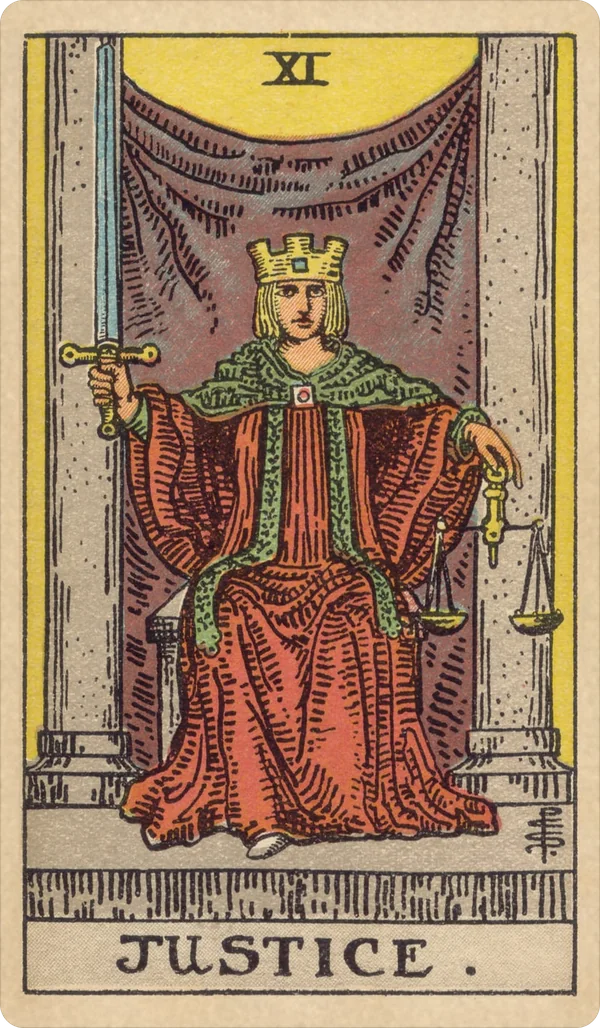
- Judgement and Justice
Judgement with Justice focuses on reckoning with the past. Together they ask you to take honest stock of an old choice and decide how to move on.
- Judgement and The World
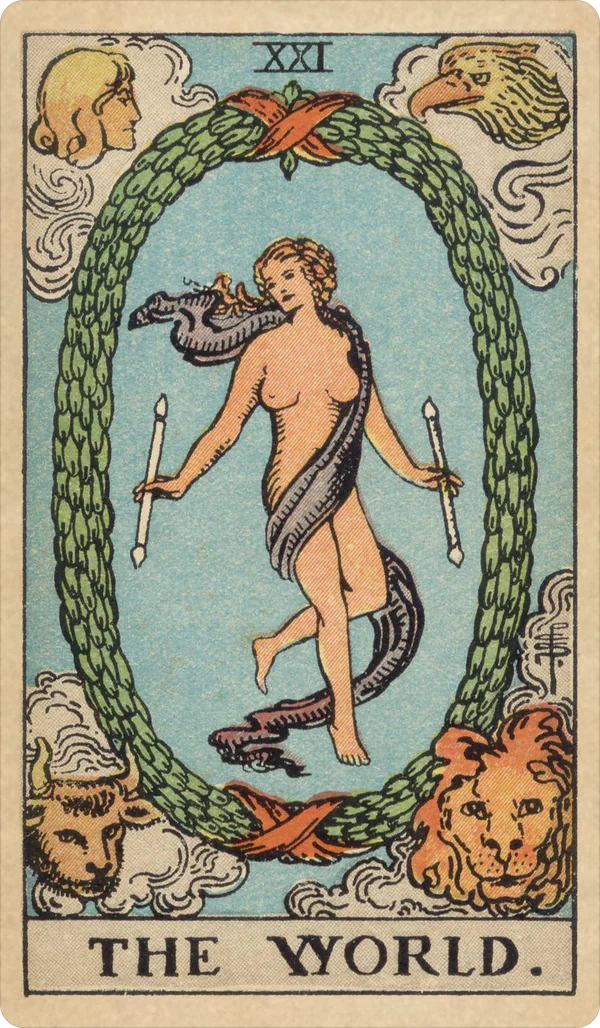
Judgement followed by The World describes a chapter coming full circle. The awakening leads to a sense of completion and readiness for what comes next.
- Judgement and Six of Cups
With the Six of Cups, the theme is reviewing the past with nostalgia. The pair asks what to keep and what to leave behind as you move forward.
- Judgement and Ace of Wands
Next to the Ace of Wands, Judgement points to a new calling that is ready to begin. The inner spark is there; the card asks you to act on it.
The most common misreading of Judgement
Beginners are often told that Judgement means you are about to be punished or judged by others, or that it has a heavy religious meaning about the end of the world. Beginners often find it intimidating. In the 1909 image, everyone rising looks relieved and open, not afraid. Another misreading is that the card is about other people's opinions. It is mostly about your own honest self-review and the courage to start again.