Temperance Tarot Card Meaning
Temperance
Pamela Colman Smith, 1909
- Upright
- balance · moderation · patience
- Reversed
- excess · imbalance · impatience
- Arcana
- Major · Number XIV
- Element
- fire
- Learn it in
- Day 15 of the 30-Day Tarot Path
In short
Temperance is the card of patient blending. Upright, it asks you to find the middle path, mix opposites with care, and give change time to settle. Reversed, it points to excess, rushing, or a life pulled too far in one direction. Its quiet message: balance is something you keep making, one small adjustment after another.
What you see on the Temperance card
Look first, read later: this is the Image-First Method from Day 5 of the course. Start with what is actually in the picture.
- Figure
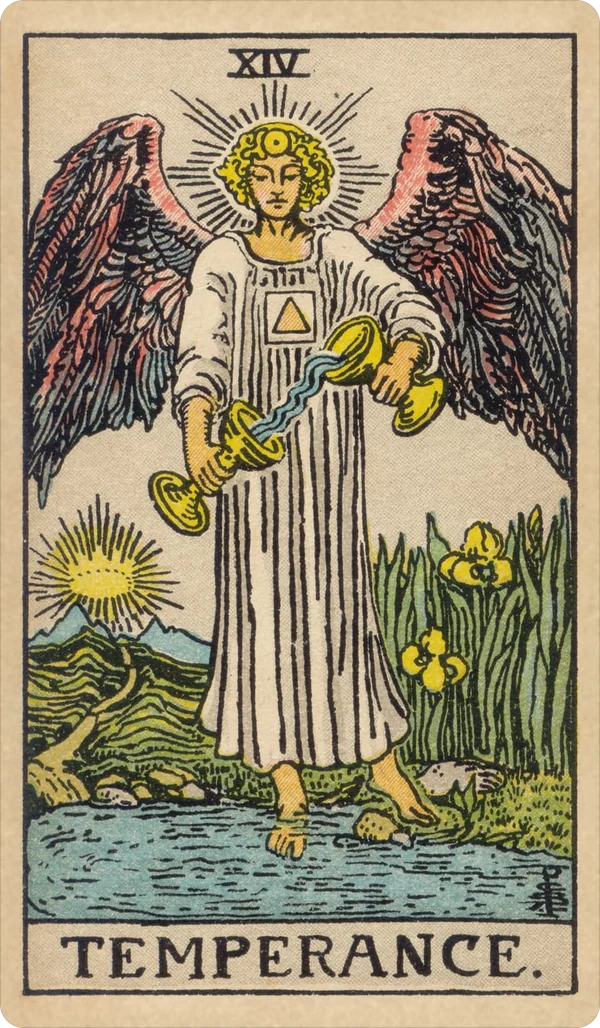
- A winged angel with golden curly hair and a glowing disc on the forehead stands at the center, dressed in a long white robe.
- Action
- The angel pours water from one golden cup into another. The stream bends at an angle that would be impossible in real life.
- Setting
- One bare foot stands in a pool and the other rests on a stone at the edge. A path winds from the water up to distant blue mountains.
- Color
- The wings are deep red and purple, the robe is white, and yellow irises bloom in tall green reeds on the right side of the card.
- Detail
- A small orange triangle sits inside a white square on the chest of the robe. At the end of the mountain path, a bright sun rises with rays that look almost like a crown.
Temperance upright meaning
The most important detail on Temperance is the water. It flows from one cup to the other at a slant, not straight down. Pamela Colman Smith drew something that cannot happen with ordinary gravity, and that small impossibility tells you this card is about a special kind of mixing: patient, deliberate, almost alchemical.
Upright, Temperance describes the art of finding the right amount. Not too much, not too little. It can point to a recovery period after a hard season, a habit you are slowly reshaping, or two parts of your life that need to work together, such as ambition and rest or independence and closeness. The angel has one foot in water and one on land, at home in both feeling and practicality.
This card is not dramatic. It rarely announces a big breakthrough. Instead, it invites you to trust gradual progress. A little more sleep, a little less scrolling, one honest conversation instead of three tense ones. The path behind the angel winds slowly toward the mountains, and the sun at its end suggests that small, steady steps do lead somewhere.
Ask yourself where you are swinging between extremes, and what the middle would actually look like.
Temperance reversed meaning
Upside down, Temperance usually points to imbalance. Too much work and no rest, too much giving and no receiving, or a habit that has tipped into excess. It can also describe impatience: wanting healing, fitness or a new skill to arrive all at once, then quitting when it does not.
Sometimes the reversal shows two parts of life fighting rather than blending. Your values say one thing and your calendar says another. The card asks you to notice the clash without judging yourself for it. Choose one small adjustment rather than an overhaul. Pouring slowly is the whole lesson of this card, even when it is upside down.
Temperance in love and relationships
Upright in love
In love, Temperance points to steady, balanced connection. It often appears when partners are learning to meet in the middle: blending routines, families, finances or different ways of handling stress. The card invites patience with how long it takes two people to fit together. For someone single, it may suggest building a calm, full life first, so that a relationship adds to it rather than fills a gap. Gentle consistency matters more than grand gestures here.
Reversed in love
Reversed in love, Temperance can point to a relationship that runs hot and cold, or one where a single person keeps compromising. It may show arguments that escalate fast, or a pattern of giving everything at the start and then pulling back. The card asks you to notice where you have lost the middle ground. Is there a small, repeatable way to restore balance, such as a weekly check-in or a pause before you reply when you feel flooded?
Temperance as feelings
Temperance as feelings describes calm, unhurried care. In a connection, it asks you to notice whether emotions feel steady or whether they swing between intense closeness and distance. It can point to feelings that are growing slowly and sincerely, without fireworks. Consider how comfortable you are with that pace. Some people mistake calm for lack of interest. This card suggests that steadiness can be one of the deepest forms of affection.
Temperance in career and money
For work and money, Temperance often points to integration: combining skills from different jobs, balancing two projects, or working across teams that do not usually talk. It favors careful pacing over crunch. If you have been burning out, the card asks what sustainable effort looks like for you. In money habits, it suggests moderation, such as a budget with room for small pleasures instead of a strict plan you abandon after two weeks. Steady habits tend to outlast big promises.
The shadow side of Temperance
In shadow work, Temperance tends to bring up the person who keeps the peace by disappearing. Always moderate, never too much, never asking for anything that might upset the balance. The work, then, is looking at where your calm is real and where it hides something you are afraid to feel, like anger, desire or grief. It also means noticing the opposite pull: using excess to escape, whether that is food, work, shopping or screens. Both are ways of avoiding the slow, honest blending the angel is doing. The angel stands with one foot in the water. In shadow, we try to stay safely on dry land.
Temperance in yes-or-no questions
Temperance is often searched as a yes-or-no card. We do not use the cards for yes-or-no verdicts. Turning the question into an open one fits this card well, because Temperance is about patient adjustments, not instant answers.
Instead of
“Will we work things out?”
Try
“What small, steady step can I take to bring more balance into this relationship this week?”
Temperance as advice
In the advice position, Temperance says: adjust by small amounts. Instead of quitting something cold or doubling down, change one variable at a time and watch what happens. Add ten minutes of rest, take one fewer task, drink one more glass of water. Notice how the mix feels before you pour again.
Journal prompts for Temperance
- Where in my life am I swinging between two extremes, and what would the middle look like in practice?
- Which two parts of me, such as ambition and rest or caution and adventure, are ready to work together instead of competing?
- The angel stands with one foot in water and one on land. Where do I need more feeling, and where do I need more practical ground?
Temperance with other cards
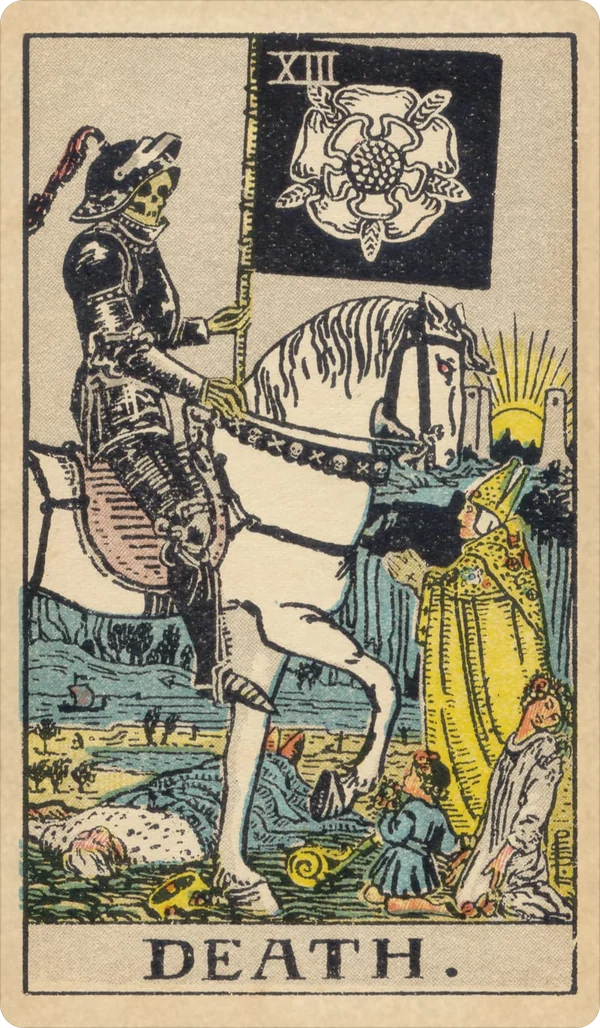
- Temperance and Death
Death followed by Temperance is a classic healing pair. After an ending, this card describes the slow work of rebuilding and finding a new balance.
- Temperance and Two of Pentacles
With the Two of Pentacles, both cards are about juggling. Together they ask whether you are balancing priorities with ease or barely keeping everything in the air.
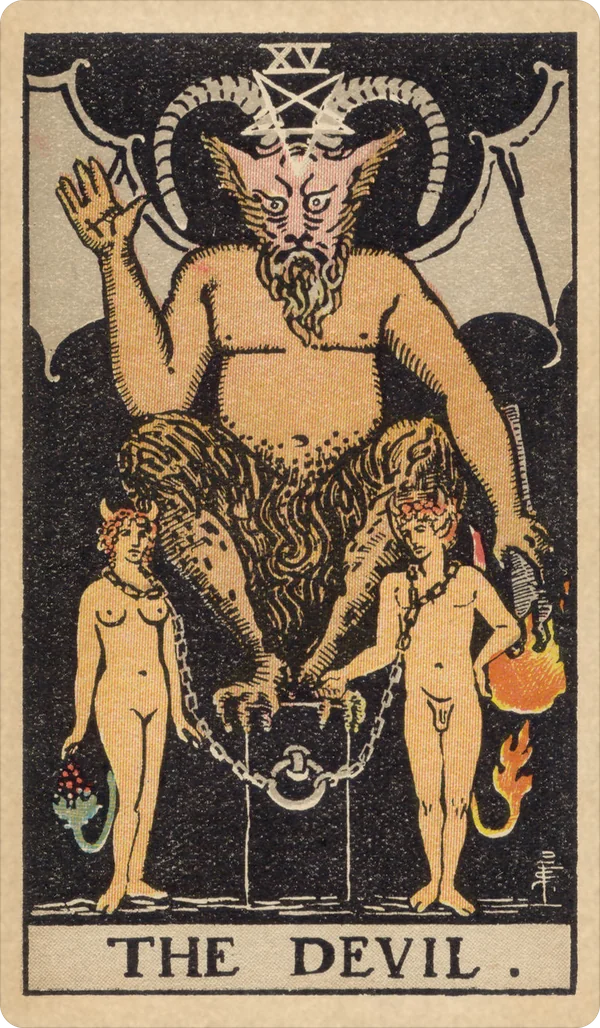
- Temperance and The Devil
Temperance and The Devil are mirror images in many ways. When they appear together, notice the line between healthy enjoyment and a habit that has started to run you.
- Temperance and Two of Cups
With the Two of Cups, the theme is two people blending their lives. The card asks how you can meet in the middle without losing yourself.
The most common misreading of Temperance
A common beginner myth is that Temperance only means giving up alcohol or other indulgences, because of the old meaning of the word. Some beginners also read it as a boring card that means nothing is happening. The 1909 image suggests something more active: the angel is constantly pouring and mixing, and the flowing water never stops. Temperance is about skillful balance and healing over time, not simple restraint or stillness.